Round Eyes Guide: Signs, Photo Test, and Almond Eye Comparison
A practical guide to round eyes: what the shape looks like, the photo checks that separate round from almond, and styling tips for open, expressive eyes without forcing a different label.
The quick answer
Round eyes usually look more open vertically than almond eyes. In a relaxed straight-on photo, the eye opening may feel closer to a circle or tall oval, and you may see visible white above or below the iris.
The fastest check is to look straight ahead with relaxed brows. If the iris is clearly framed by space above or below it and the corners do not taper strongly, round eyes are likely. If the iris touches both lids and the outline looks longer than tall, almond eyes may be a better match.
Round is an outline trait. You can have round eyes that are also hooded, slightly upturned, slightly downturned, close-set, or wide-set. Treat it as one layer of your eye description rather than the only label.
What are round eyes?
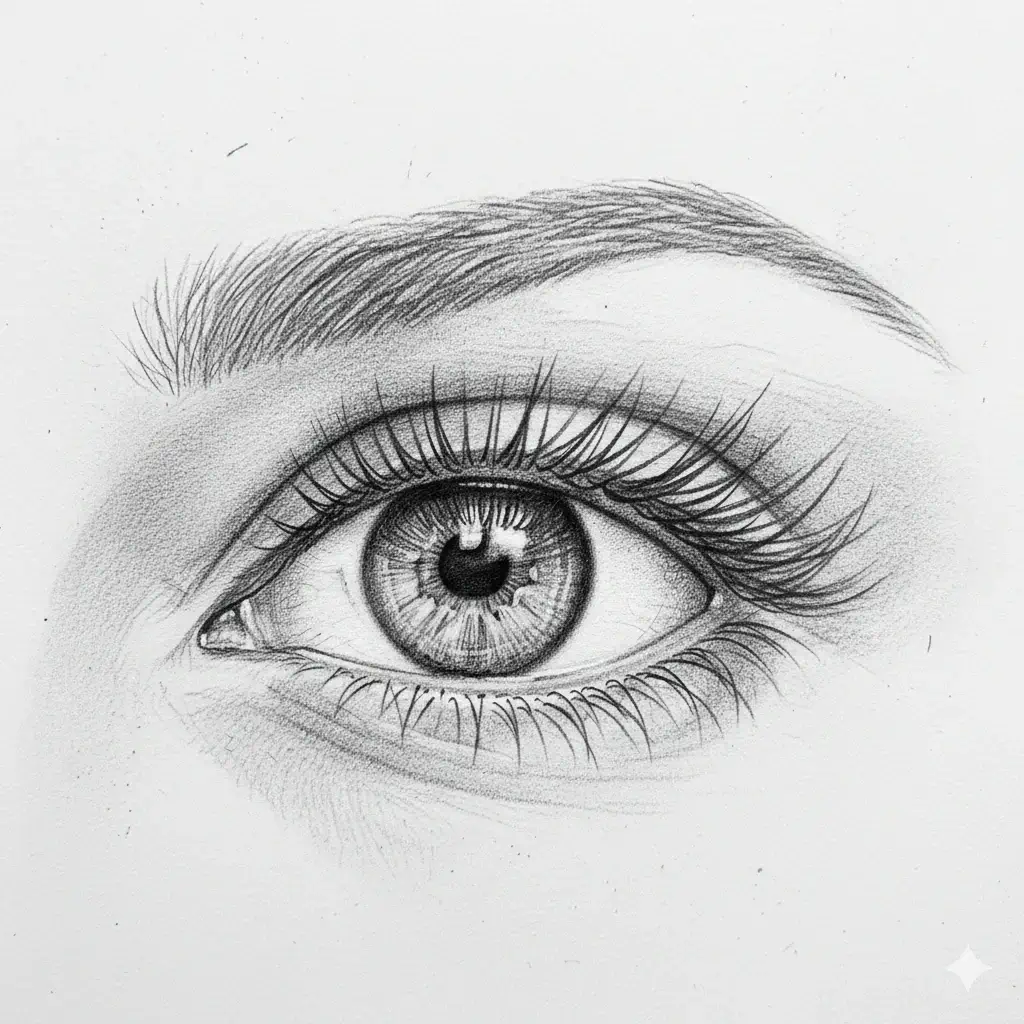
Round eyes describe an eye opening that appears open, circular, or vertically full. The lid line curves around the iris more noticeably than it does in a strongly tapered almond shape, so the eyes often read as bright, alert, or expressive in photos.
This does not mean the eyes must be perfectly circular. Many people have softly round eyes, round-almond overlap, or one eye that appears rounder than the other. Expression, lashes, eyeliner, camera angle, and brow position can all make the shape look more or less round.
The useful question is not whether your eyes fit a perfect category. The useful question is whether vertical openness and visible iris framing are strong enough to call roundness part of your eye-shape result.
Signs you may have round eyes
Use these clues together. One wide selfie is not enough, but a calm mirror check plus two ordinary photos usually makes the pattern clear.
The eye opening looks tall or circular
The first impression is openness rather than a narrow, elongated taper.
White may show around the iris
You may see visible white above, below, or around more of the iris when looking straight ahead.
Corners taper less strongly
The inner and outer corners can still narrow, but the overall outline does not read as sharply almond-shaped.
Expression changes the label quickly
Raised brows, curled lashes, and brightening makeup can make already round eyes look even more open.
A photo and mirror check that works
Round eyes are easy to overcall because surprise, a high camera angle, or lifted brows can make many eyes look more open. Use a repeatable check before deciding.
The goal is to separate natural outline from expression. Once you know whether roundness is part of the outline, makeup and AI results become easier to interpret.
Take a relaxed front-facing photo
Use daylight, camera at eye height, and a calm expression. Keep your brows relaxed and look straight at the lens.
- Avoid raised brows or a surprised expression.
- Step back from the camera and crop later to reduce lens distortion.
- Use minimal eye makeup for the most honest first check.
Compare height with width
Ask whether the eye feels vertically open or horizontally elongated. Round eyes tend to show more height relative to width.
- Do not judge from one dramatic close-up.
- Check both eyes because asymmetry is normal.
- Look at the natural lid line, not only lashes.
Check iris framing
Look for visible white above or below the iris in a neutral gaze. This is one of the strongest round-vs-almond tie-breakers.
- Visible white supports a rounder reading.
- Iris contact with both lids supports a more almond reading.
- A small amount of white can still be normal; use the whole outline too.
Separate roundness from lid and angle traits
After judging the outline, look for hooding, upturn, downturn, close spacing, or wide spacing as secondary traits.
- Round and hooded can coexist.
- Round and upturned can coexist.
- Spacing labels do not replace the round eye-shape label.
Round vs almond vs hooded eyes
These labels are often mixed together. The cleanest method is to separate outline, lid coverage, and corner angle instead of forcing one word to explain everything.
| Feature | Round eyes | Comparison label | What to check |
|---|---|---|---|
| Overall outline | More open vertically, often closer to a circle or tall oval. | Almond eyes look longer, narrower, and more tapered. | Ask whether the eye reads open or elongated first. |
| Iris visibility | More white may show above or below the iris in a relaxed gaze. | Almond eyes often have the iris touching the upper and lower lids. | Use a neutral front-facing photo, not a surprised expression. |
| Lid structure | Round eyes may still have visible crease, hooding, or monolid structure. | Hooded describes lid coverage, not whether the outline is round. | Judge roundness first, then check whether the crease is hidden. |
| Common styling issue | Very thick liner can shrink the open shape or make it look heavier. | Almond styling often stretches the outer third to create taper. | Open your eyes after applying liner and see whether the shape still feels balanced. |
Makeup and eyeliner tips for round eyes
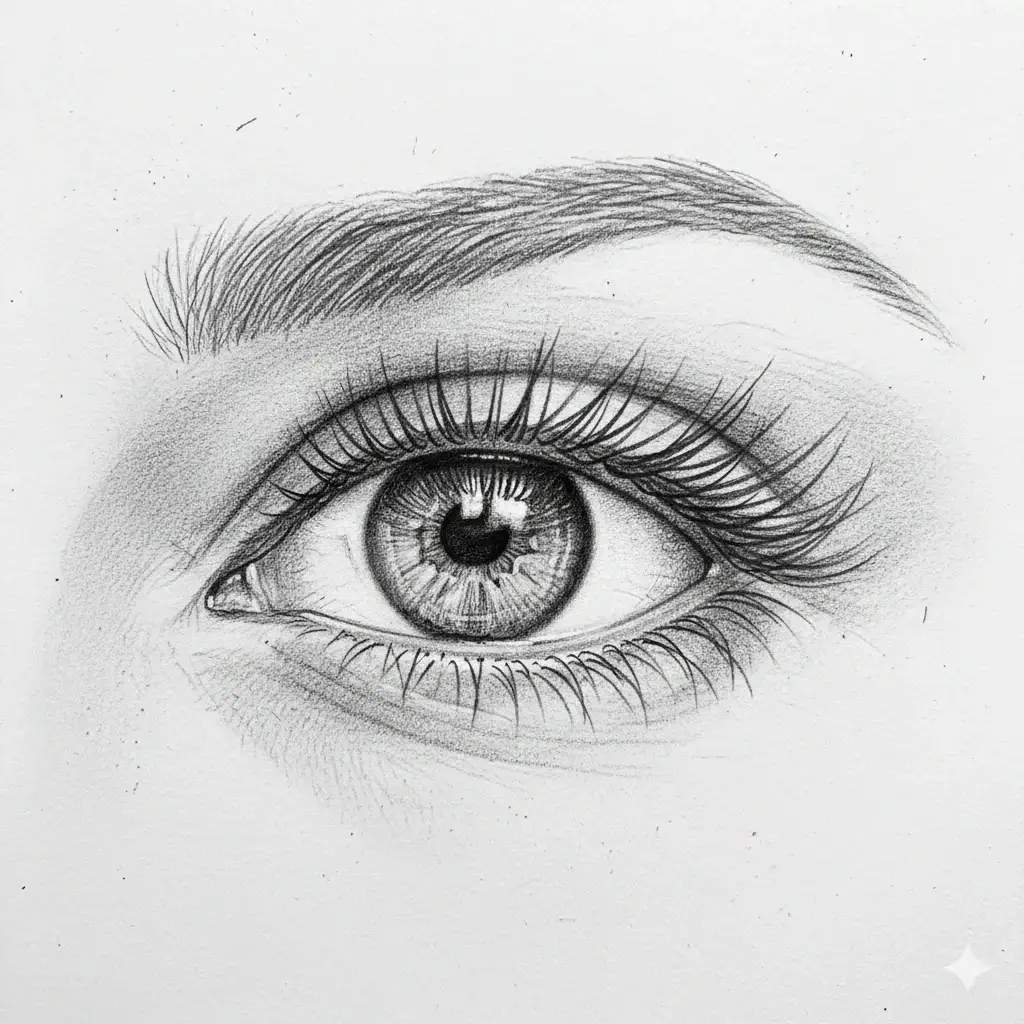
Round eyes already have openness, so styling usually works best when it adds definition without fighting the natural shape. You can keep the bright look, or you can stretch the outer third if you want a softer almond effect.
The most reliable approach is to map eye makeup while your eyes are open. This shows whether liner, shadow, or lashes are balancing the shape in the view other people actually see.
What often works
- Keep inner-corner liner thin so the eye stays clean and open.
- Add definition to the outer third if you want a longer look.
- Use mascara or lashes that lift outward rather than only straight up.
- Blend shadow softly beyond the outer corner for gentle balance.
What to avoid overdoing
- Avoid very thick dark liner all around if it makes the eye look smaller.
- Do not copy every almond-eye tutorial without adapting the shape.
- Avoid using makeup to hide roundness as if it were a flaw.
- Do not judge the result only with eyes closed.
Limits and common mistakes
The biggest mistake is treating round eyes as a rigid category. Roundness can be subtle, moderate, or mixed with almond, hooded, upturned, or downturned traits.
Another mistake is relying on one photo. Wide-angle lenses, raised brows, heavy mascara, and a lowered chin can all exaggerate openness. A calm mirror check is usually more trustworthy than a dramatic selfie.
Finally, round eyes are not better or worse than any other eye shape. The label is useful because it explains visible proportion and styling behavior, not because it assigns value to your face.
When an AI eye shape detector can help
An AI detector is useful when your result sits between round and almond or when you suspect a layered label such as hooded round eyes. A good result should evaluate iris exposure, lid visibility, corner angle, and spacing together.
Use a clear front-facing photo with relaxed brows and minimal obstruction from lashes or sunglasses. Then compare the AI result with the checks in this guide rather than treating any one output as a final verdict.
Want a second opinion from a photo?
Upload a relaxed front-facing image, then compare the AI result with the round-vs-almond and lid-structure checks above.
Frequently asked questions
Round eyes have an eye opening that looks vertically open, circular, or tall compared with almond eyes. You may see more white around the iris in a relaxed straight-on gaze.
Use a relaxed front-facing photo. If the eye reads open rather than elongated, the iris is framed by visible white, and the corners do not taper strongly, round eyes are likely.
Not exactly. They are different outline tendencies, but many people sit between them. Almond eyes usually look longer and more tapered, while round eyes look more open vertically.
Yes. Round describes the outline of the eye opening, while hooded describes upper-lid coverage. A person can have both traits at once.
Thin inner-corner liner, soft outer-corner definition, and outward-lifted lashes often work well. Thick liner all around can make round eyes look smaller if overused.
No. Visible white is a helpful clue, not a strict rule. Use it with the overall outline, corner taper, and multiple ordinary photos.
References and further reading
These links support the eye-shape vocabulary and help readers continue the identification process on-site.